
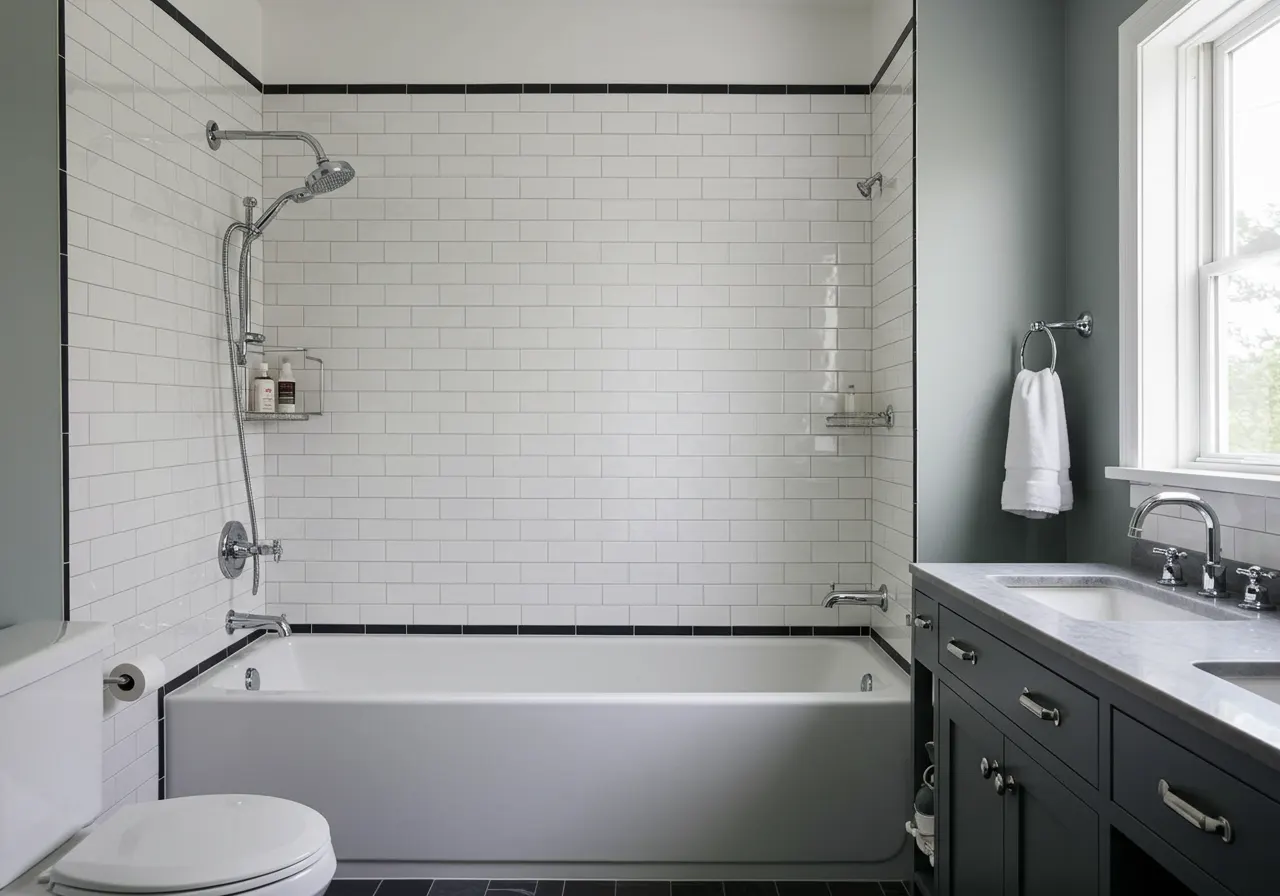
Whether you're planning ahead for aging in place, recovering from surgery, or helping a family member with mobility challenges, bathroom accessibility modifications are one of the most impactful home improvements you can make. The bathroom is where most home falls happen — and a few smart changes can dramatically reduce that risk while still looking beautiful.
Walk-In Showers: The Most Important Upgrade
Stepping over a bathtub wall is the #1 fall risk in a bathroom. A zero-threshold (curbless) or low-threshold walk-in shower eliminates that danger entirely. We install tile walk-in showers with proper slope for drainage, non-slip textured floor tile, and optional fold-down benches. These aren't the clinical-looking shower stalls from a hospital — they look like any modern spa shower. See our shower conversions page for examples.
Grab Bars: Not Just for the Elderly
Modern grab bars come in finishes like brushed nickel, matte black, and chrome — they look just like towel bars but are rated to support 250–500 lbs. We install them in showers, next to toilets, and at tub entry points. The key is proper installation: grab bars must be anchored into wall studs or blocking, not just drywall.
- Shower entry: vertical grab bar at shower door or entrance
- Inside shower: horizontal bar on the long wall for balance while standing
- Shower bench area: L-shaped bar for sit-to-stand support
- Toilet area: one bar on the wall beside the toilet, or a floor-mounted support
Non-Slip Flooring
Not all tile is created equal when it comes to slip resistance. We use tile rated DCOF 0.42 or higher (the ANSI standard for wet areas) on all accessible bathroom floors. Textured porcelain and matte-finish tile offer excellent grip without looking institutional. Polished marble and glossy ceramic? Beautiful but dangerous when wet.
Comfort-Height Toilets
Standard toilets are 15 inches from floor to seat. Comfort-height (ADA-compliant) toilets are 17–19 inches — much easier to sit down on and stand up from. This is one of the simplest, most impactful upgrades we install. Learn more about our fixture & vanity upgrade options.
Wider Doorways and Lever Handles
Standard bathroom doors are 24–28 inches wide. For wheelchair access, you need at least 32 inches (36 is better). Pocket doors or barn-style sliding doors can solve tight spaces. Lever door handles and single-lever faucets are easier to operate for anyone with limited grip strength.
What Does an Accessibility Remodel Cost?
Individual modifications range from $200 (grab bar installation) to $3,000–$8,000 (full tub-to-walk-in-shower conversion). A comprehensive accessible bathroom remodel — including walk-in shower, grab bars, comfort-height toilet, non-slip floors, and updated vanity — typically runs $8,000–$18,000 in the Upstate SC area depending on scope and finishes.
We Design Accessible Bathrooms That Look Beautiful
At Upstate Bath Renewal, we believe accessible bathrooms should look just as good as any other remodel. We serve Greenville, Anderson, Clemson, Spartanburg, Simpsonville, and all of Upstate South Carolina. Contact us for a free accessibility consultation.