
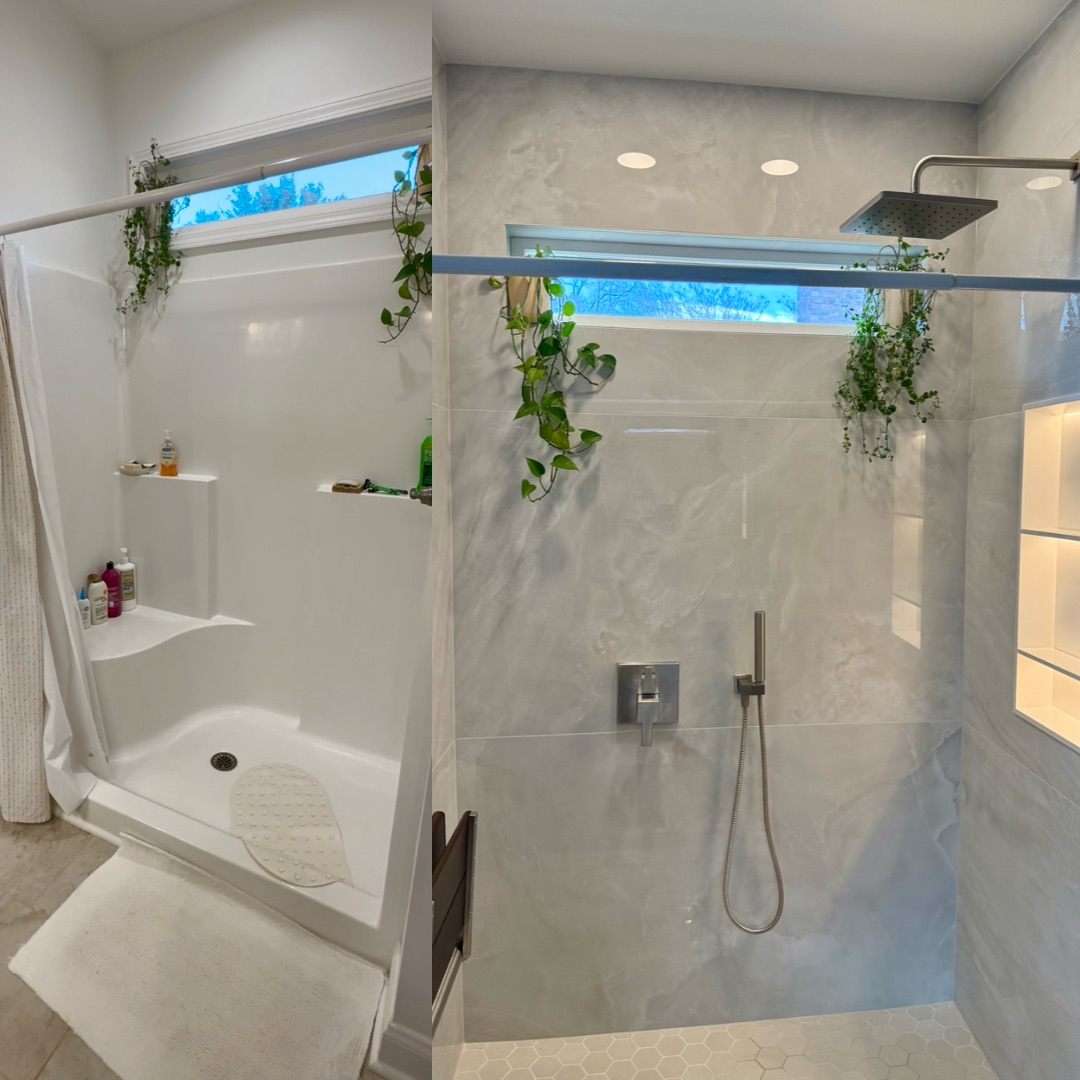
Aging-in-place bathroom remodeling is the single fastest-growing category we serve across the Upstate. The conversation usually starts with the same line: 'Mom is starting to have trouble stepping over the tub.' Sometimes it's about a parent. Sometimes it's about the homeowner planning 15 years ahead. Either way, the goal is the same — keep the home livable and safe for the next 20 years without making the bathroom look like a hospital.
The Three Build Options
- LOW-THRESHOLD ACRYLIC / SOLID SURFACE — 2–3" curb, 1-day install, $8,000–$12,000 with grab bars and bench
- LOW-THRESHOLD CUSTOM TILE — 2–3" curb, 5–7 day install, $13,000–$16,000
- CURBLESS CUSTOM TILE — true zero-entry, 7–10 day install, $14,000–$20,000+
Curbless (zero-entry) is the gold standard for wheelchair access and for anyone with significant mobility issues. It requires dropping the subfloor or framing a slope toward a linear drain, which is why it costs more than a low-threshold build on the existing footprint.
The Five Safety Details That Actually Matter
- Slip-rated flooring (DCOF >= 0.42 wet) — mosaic or pebble for tile builds, textured base for acrylic/solid surface
- ADA-grade grab bars (1.5" diameter) mounted into real blocking inside the framing, not into drywall anchors
- Lever-handle controls (easier than knobs on arthritic hands)
- Thermostatic / anti-scald mixing valve (prevents sudden hot bursts)
- Handheld showerhead on a slide bar with at least 60" of hose
Design Details That Keep It Looking Like a Real Bathroom
The default look for 'accessible bathroom' on Google Images is unfortunate — chrome bars, vinyl flooring, fluorescent lights. None of that is required. Here's how we keep aging-in-place bathrooms looking like high-end spas:
- Designer-finish grab bars (oil-rubbed bronze, brushed nickel, matte black) instead of chrome
- Concealed-flange grab bars that look like towel bars (Moen and Delta both make these)
- Built-in tile bench or teak folding seat instead of plastic 'shower chair'
- Frameless glass panel instead of a full enclosure (easier wheelchair access, looks cleaner)
- Large-format porcelain on the walls for an upscale look
- LED-lit niche above the bench so shampoo isn't fumbled for at night
- Heated floor for the post-shower step — small upgrade, huge daily quality of life
Companion Upgrades to Consider in the Same Project
- Comfort-height (17–19") toilet — $400–$800 swap, dramatic difference
- Vanity with integrated drawer pull rather than knob — easier on arthritic hands
- Pendant or sconce lighting at vanity (no overhead glare)
- Wider doorway (32" minimum, 36" for wheelchair access) — $800–$2,500 depending on framing
Will Insurance, Medicare, or VA Cover Any of This?
Honest answer: Medicare generally does not cover bathroom remodels. VA Aid & Attendance, long-term care insurance, and some state/county aging-in-place grants do partially cover accessibility modifications. We provide itemized invoices that align with most program requirements — but the case manager or insurance agent files the claim, not us. Always check with your specific provider before assuming coverage.
What This Costs vs. Assisted Living
A full curbless tile walk-in shower with bench, designer grab bars, slip-rated flooring, lever handles, and comfort-height toilet runs $14,000–$20,000 in the Upstate. Assisted living in the Greenville area runs $4,500–$7,500 per month. One year of assisted living equals 4–7 of these remodels. The math is brutal, and it's the single most-cited reason our aging-in-place clients pull the trigger.
If you're planning ahead — or planning right now because mom or dad is starting to struggle — we'll do a free in-home accessibility assessment, walk the bathroom with you, and quote both the budget low-threshold option and the gold-standard curbless build so you can make the call.